zorro

zorro
looking for the true

Thursday, September 20, 2012

Cutie Stories - "Cogito ergo sum.."


Cogito ergo sum

From Wikipedia, the free encyclopedia


"..
Cogito ergo sum (French: "Je pense donc je suis"; English: "I think, therefore I am") is aphilosophical Latin 
statement proposed by René Descartes. The simple meaning of the phrase is that someone wondering whether 
or not he or she exists is, in and of itself, proof that something, an "I", exists to do the thinking. However, this 
"I" is not the more or less permanent person we call "I". It may be that the something that thinks is purely
 momentary, and not the same as the something which has a different thought the next moment.[1]
The phrase became a fundamental element of Western philosophy, as it was perceived to form a foundation for all knowledge. While other knowledge could be a figment of imagination, deception or mistake, the very act of doubting one's own existence serves to some people as proof of the reality of one's own existence, or at least that of one's thought.
The statement is sometimes given as Dubito, ergo cogito, ergo sum (English: "I doubt, therefore I think, therefore I am").
Descartes's original statement was "Je pense donc je suis", from his Discourse on Method (1637). He wrote it in French, not in Latin and thereby reached a wider audience in his country than that of scholars. He uses the Latin "Cogito ergo sum" in the laterPrinciples of Philosophy.."


"NON COGITO, ERGO SUM":

Sometimes thinking is a bad idea.. an academic research to put the case for unthinking...

"..

How do you learn to unthink? Dylan believes the creative impulse needs protecting from self-analysis: “As you get older, you get smarter, and that can hinder you…You’ve got to programme your brain not to think too much.” Flann O’Brien said we should be “calculatedly stupid” in order to write. The only reliable cure for overthinking seems to be enjoyment, something that both success and analysis can dull. Experienced athletes and artists often complain that they have lost touch with what made them love what they do in the first place. Thinking about it is a poor substitute..


We live in age of self-reflection, analysing every aspect of our work, micro-commentating on our own lives online, reading articles urging us to ponder what makes us happy. Much of this may be worthwhile, but we also need to put thinking in its place. Djokovic’s return was both the culmination of his life’s effort and an expression of careless joy. It kinda worked.."

** Ian Leslie works in advertising, is the author of "Born Liars" and tweets as @mrianleslie


Usually translated from the Latin as 'I think, therefore I am':


cogito, ergo sumPossibly the best known of all philososophical quotations; this is from the French philosopher René Descartes in Discourse on Method, 1637, where he attempted to prove his existence as a thinking being, by thinking. 'I think, therefore I am' comes to us in English via two translations. Descartes' original statement in French was "Je pense, donc je suis"..


What is the meaning of "cogito ergo sum.." ??

***Renee Descartes, the famous philosopher, used that to prove his own existence. It literally means, "I think; therefore, I am." He claimed that his ability to form thoughts made him a real, living, human being.

  http://mrzotyi41.blogspot.hu/ ~ cogito ergo sum ~

Saturday, July 14, 2012

Epic World History: Christina Vasa - Swedish Monarch

Epic World History: Christina Vasa - Swedish Monarch: Christina Vasa - Swedish Monarch Christina was born on December 8, 1626, in Stockholm as the only legitimate child of King Gustavus Adol...

  Expanding the world into first global age   /shared:

"..Epic World History":

Christina Vasa - Swedish Monarch


"..Christina was born on December 8, 1626, in Stockholm as the only legitimate child of King Gustavus Adolphus (1594–1632) and his wife, Maria Eleanor of Brandenburg. She was mistakenly thought to be a boy at her birth; consequently Gustavus Adolphus had her raised as a boy.."

Christina Vasa - Swedish Monarch   Vasa Dynasty

Vasa Dynasty:


"..The Swedish Vasa ruled Sweden directly from 1523 to 1654, and their descendants ruled through the female line until 1818. They also were kings of Poland 1587–1668.

The people of Sweden had long resented the Union of Kalmar that had united Denmark, Norway, and Sweden (which then included Finland). Throughout the 15th century, there had been sporadic attempts to break away under Swedish claimants.

The kings of Denmark held the othercountries as glorified satrapies (provinces). Parts of former Swedish territory in the south were held by Denmark and Norway, while trade was in the hands of the German Hanseatic League.."

You might also like from "Epic World History":

Thirty Years’ War:

Thirty Years’ War

"..The Thirty Years’ War was a series of wars, escalating from armed clashes of German princes to military confrontations involving all major European monarchs from 1618 to 1648. It was a crucial stage in the ongoing European wars of religion between Catholicism and Protestantism.

It was also the first civil war in continental Europe that mixed religious conflict with traditional princely territorial ambitions and emerging sentiments of national unity and transnational geopolitical balance of power.

In 1617, Ferdinand of Styria (1578–1637), the Habsburg heir apparent to the imperial throne of the Holy Roman Empire, was elected to be king of Bohemia. The Calvinists, the majority in Bohemia, revolted against their new Catholic king.."

Vikings in Norway, Sweden, and Denmark:


Viking ship

"..Vikings were peoples of Scandinavia who raided, conquered, and colonized parts of Europe from the end of the eighth century to the 11th century. Their homeland was in the three modern Scandinavian countries: Denmark, Norway, and Sweden.

The climate there caused poor soil conditions, necessitating seafaring, fishing, and hunting in addition to agriculture. This sparsely populated region was surrounded by water, and various natural resources encouraged trade and contacts; therefore by the Viking age, Scandinavians, apart from Finland and the Sami territories, shared a common culture.

By trading and traveling, Scandinavians were fast in adopting innovations and technologies; therefore their culture was rich and vibrant by the eighth century. Main sources of the history of Vikings are archaeological findings and written records. Most of these texts were written long after the Viking period; therefore their reliability is debated.."

Sunday, July 8, 2012

Epic World History: "Cogito ergo sum" ~ René Descartes

Epic World History: René Descartes: René Descartes René Descartes was a metaphysician, mathematician, and natural philosopher responsible for changing the course of philoso...
              Art Spy: Expanding the world into first global age..

René Descartes ~ "Cogito ergo sum.."


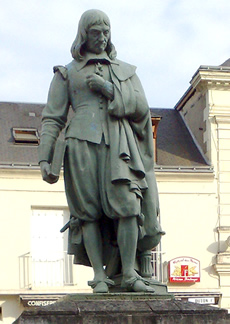
René Descartes (French: [ʁəne dekaʁt]Latinized form: Renatus Cartesiusadjectival form: "Cartesian"; March 1596 – 11 February 1650) was a French philosopher, mathematician, and writer who spent most of his adult life in the Dutch Republic. He has been dubbed the 'Father of Modern Philosophy', and much subsequent Western philosophy is a response to his writings,which are studied closely to this day..


***He is perhaps best known for the philosophical statement "Cogito ergo sum" (FrenchJe pense, donc je suis; English: I think, therefore I am), found in part IV of Discourse on the Method (1637 – written in French but with inclusion of "Cogito ergo sum") and §7 of part I of Principles of Philosophy (1644 – written in Latin).
For Descartes, morals was a science, the highest and most perfect of them, and like the rest of sciences had its roots in Metaphysics. In this way he argues for the existence of God, investigates the place of men in nature, formulates the theory of mind-body dualism and defends free will..

  "..By the 1640s, Descartes ran into trouble in the Dutch Republic where Cartesianism had won an extensive and vociferous following. Intellectually conservative, university-based Aristotelian Calvinists identified Cartesianism with their liberal Protestant enemies.. Although Descartes was not a courtier by nature and was quite concerned in his career to avoid patronage, he eventually succumbed to the lure of the court, and went to Stockholm in 1649 to tutor the brilliant young Queen Christina Vasa of Sweden (1626–89) in philosophy.."

You might also like from "Epic World History":
Pre-Socratic Philosophy

"..The pre-Socratics were Greek philosophers who speculated about the nature of the world for more than 150 years before Socrates flourished. Their philosophizing about nature sought answers to questions that were metaphysical and scientific, although these disciples were not then separated. The metaphysical questions asked by the pre-Socratics were inquiries into the ultimate nature of everything..
Their questions included What is the beginning (arche) or source of all things? What is reality and what is only appearance? What is everything made of?.."


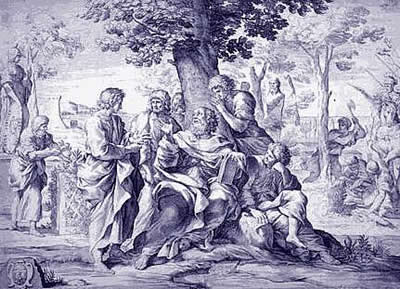
Socrates:

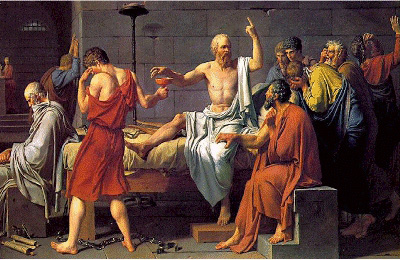
"..Socrates is one of the three greatest philosophers of Greek classical thought and, together with Aristotle and Plato, helped to provide the foundations of Western thought. Socrates was the first of this triumvirate, although he did not produce any written records of his beliefs.. He was brought to trial and condemned to death. 

However, the Socratic idea that it is possible to lead the mind to profound truths without previous knowledge of the background to those truths is no longer widely supported in academic institutions. Instead the Western tradition features the mastery of content as well as the ability to guide the mind to the truths behind or beyond that content.


Socrates chose to swallow the hemlock that killed him even though it is likely that he could have escaped from confinement had he so desired. However, Socrates believed it was his duty to continue to serve the state and so acquiesced in the process..

However, the Socratic idea that it is possible to lead the mind to profound truths without previous knowledge of the background to those truths is no longer widely supported in academic institutions. Instead the Western tradition features the mastery of content as well as the ability to guide the mind to the truths behind or beyond that content.."

The Ancient World Prehistoric Eras to 600 c.e.

"..The deposition of the last emperor, Romulus Augustulus, in 476 c.e. by the Gothic chief Odovacar marks the fall of the Western Roman Empire and the subsequent transition from classic antiquity to the Middle Ages..
.. Chroniclers and laypeople alike had been far more traumatized by the Roman defeat at Adrianople (near Istanbul) in 378 c.e. in the East, the worst since Cannae, when Hannibal seriously threatened to overrun Rome, or by the Sack of Rome in 410 c.e. in the West.. In 378 the Goths destroyed the entire eastern Roman army at Adrianople, and emperor Valens fell on the battlefield. His successor, Theodosius I, was the last great emperor to rule over the whole of the empire..

There  ..was a last, short-lived attempt to reunify the Roman Empire. After Justinian’s death the eastern Byzantine Empire, which for a century continued to claim sovereignty over the West, although to no avail, became increasingly Hellenized and greatly influenced the development of eastern European cultures, while barbarian and western Romans lay the foundations of western European civilization..


Shared by Cintra Pirata "What News Pussycats" ~ aloha oe*


http://www.youtube.com/my_history?feature=mh_lolz

mrzotyi41.blogspot.hu
~ mrzotyi.blog.se
 "Art Spy" ~ aloha oe* 
~ funny stories in an eternal world ~
                                                                     

Top Ten Historical Sites in the World ~ aloha oe

Történelem mindenkinek ~ interesting parts of Human History ~

   http://mrzotyi41.blogspot.hu/ ~ cogito ergo sum ~